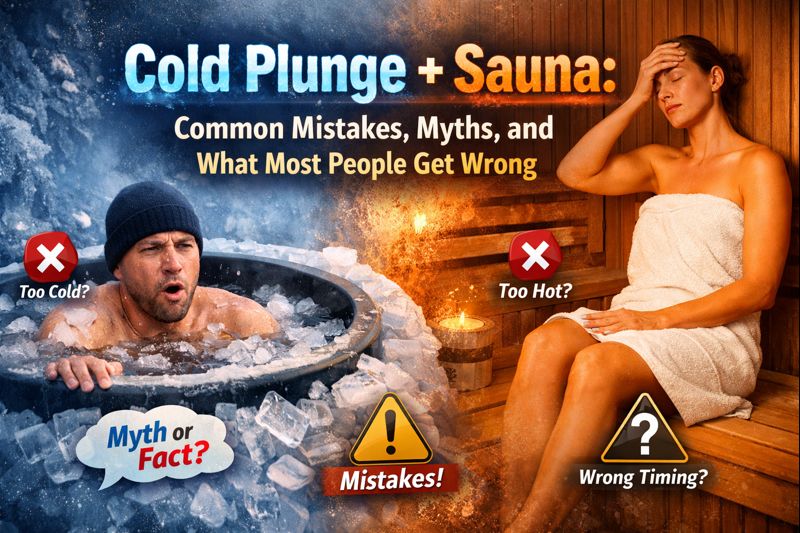
The cold plunge and sauna routine is everywhere right now. From social media reels to wellness blogs, everyone seems to be trying it. But as its popularity grows, so does confusion.
Many people jump into hot-cold therapy expecting instant results. Instead, they feel uncomfortable, overwhelmed, or unsure if they’re doing it correctly. Some quit early. Others push too hard and feel worse than before.
This article focuses on what most guides skip: the mistakes, myths, and misunderstandings around the cold plunge and sauna combo. The goal is simple—help you get real benefits without unnecessary discomfort, stress, or risk.
Cold Plunge Myths & Mistakes
Myth #1: “Colder Is Always Better”
One of the biggest myths in cold plunge and sauna therapy is that the colder the water, the better the results. Your body responds to controlled exposure, not extremes.
-
Extreme cold is not required
-
Benefits come from gradual adaptation, not shock
-
Beginners often see results even with cold tap water
Jumping into icy water too soon can push your body into survival mode—stress hormones spike, breathing becomes difficult, and instead of calming your system, you may overwhelm it.
Tip: Cold exposure should be challenging—but manageable. If it feels unbearable, it’s likely too much.
Mistake #1: Starting With the Cold Plunge
Many people start their routine with a cold plunge because it looks intense or trendy. For beginners, this often backfires:
-
Cold-first spikes stress hormones
-
Muscles are tight and unprepared
-
Breathing becomes shallow and rushed
Better approach: Start with heat. Sauna sessions relax muscles, increase circulation, and prepare the body for cold exposure. Entering cold after heat makes the transition smoother and easier to control.
Mistake #2: Staying Too Long
Longer sessions do not mean better results. Staying too long can cause:
-
Numbness from prolonged cold
-
Dizziness from overheating in the sauna
-
Fatigue instead of recovery
Tip: Short, repeatable sessions work best. If you finish feeling drained instead of refreshed, you likely stayed too long.
Myth #3: It’s Only for Athletes
Athletes popularized cold plunge and sauna routines, but these practices aren’t just for sports recovery. Non-athletes use them for:
-
Stress reduction
-
Mental clarity
-
Better sleep
-
Mood balance
The cold plunge and sauna combo is now a daily or weekly wellness ritual. You don’t need to be highly trained—your nervous system responds regardless of fitness level. If you’re curious why cold plunges are so popular, check out The Benefits of Cold Plunge to see how they help your body and mind.
Mistake #3: Ignoring Breathing
Breathing is often overlooked, yet it’s one of the most important parts of hot-cold therapy.
Poor breathing can lead to:
-
Panic in cold water
-
Rapid heart rate
-
Unnecessary discomfort
Tip: Slow, controlled breathing tells your nervous system you’re safe, helping cold exposure feel calm and manageable.
Myth #4: More Sessions Mean Faster Results
Contrast therapy isn’t a “more is better” situation—especially for beginners. Too much hot-cold exposure can:
-
Overstimulate the nervous system
-
Increase fatigue
-
Reduce recovery benefits
Tip: Start with 2–4 sessions per week. Your body needs time to adapt. Wellness improves through balance, not pressure.
Mistake #4: Doing It Too Late at Night
Sauna heat relaxes, but cold exposure is stimulating. Late-night plunges may:
-
Increase alertness
-
Delay sleep
-
Disrupt circadian rhythm
Many find better results by doing cold plunges earlier in the day, while evening sauna-only sessions support relaxation and sleep.
Sauna Myths & Mistakes
Sauna Myth #1: “Longer Heat = Better Results”
Many believe that staying in the sauna for long periods produces more benefits. In reality:
-
Prolonged heat can over-stress the body
-
Can lead to dehydration, dizziness, or heart strain
Better approach: Start with 10–20 minute sessions at moderate temperatures. The goal is controlled exposure, not endurance.
Sauna Myth #2: “Saunas Are Only for Athletes”
Saunas benefit anyone, not just athletes. Regular sessions improve:
-
Circulation
-
Mental relaxation
-
Sleep quality
-
Stress reduction
Sauna Mistake #1: Too Hot, Too Long
Overheating can cause nausea, dizziness, or fainting.
Tip: Use moderate heat and gradually increase session length. Beginners often start with 160–180°F (70–82°C) for 10–20 minutes.
Sauna Mistake #2: Skipping Hydration
Saunas cause significant fluid loss through sweating. Skipping hydration can lead to:
-
Headaches
-
Cramps
-
Fainting
Tip: Drink water before, during, and after sauna sessions. Electrolytes help if you sweat heavily.
Sauna Mistake #3: Doing Sauna Right Before Sleep
Intense heat right before bed raises core body temperature, which can delay sleep.
Tip: Use sauna 1–3 hours before bedtime, or opt for a short, moderate evening session.
Sauna Mistake #4: Ignoring Heart or Blood Pressure Issues
Saunas increase heart rate and blood flow, which can be risky for those with cardiovascular concerns.
Tip: Consult a doctor before starting sauna sessions if you have heart, blood pressure, or circulation issues.
Best Portable Home Saunas with Remote Control
Who Should Be Extra Cautious?
Safety always comes first. While sauna and cold plunge therapy is generally safe for healthy adults, consult a doctor if you have:
-
Heart conditions
-
Blood pressure issues
-
Circulation disorders
Final Thoughts
The cold plunge and sauna combo isn’t about extremes, toughness, or social media trends. Done correctly, it’s a flexible wellness tool that adapts to your body—not the other way around.
By avoiding common myths and mistakes for both cold plunge and sauna, hot-cold therapy becomes sustainable, enjoyable, and genuinely beneficial over time.